Día de Muertos: Understanding the Joyful Remembrance Behind the Misunderstood Holiday

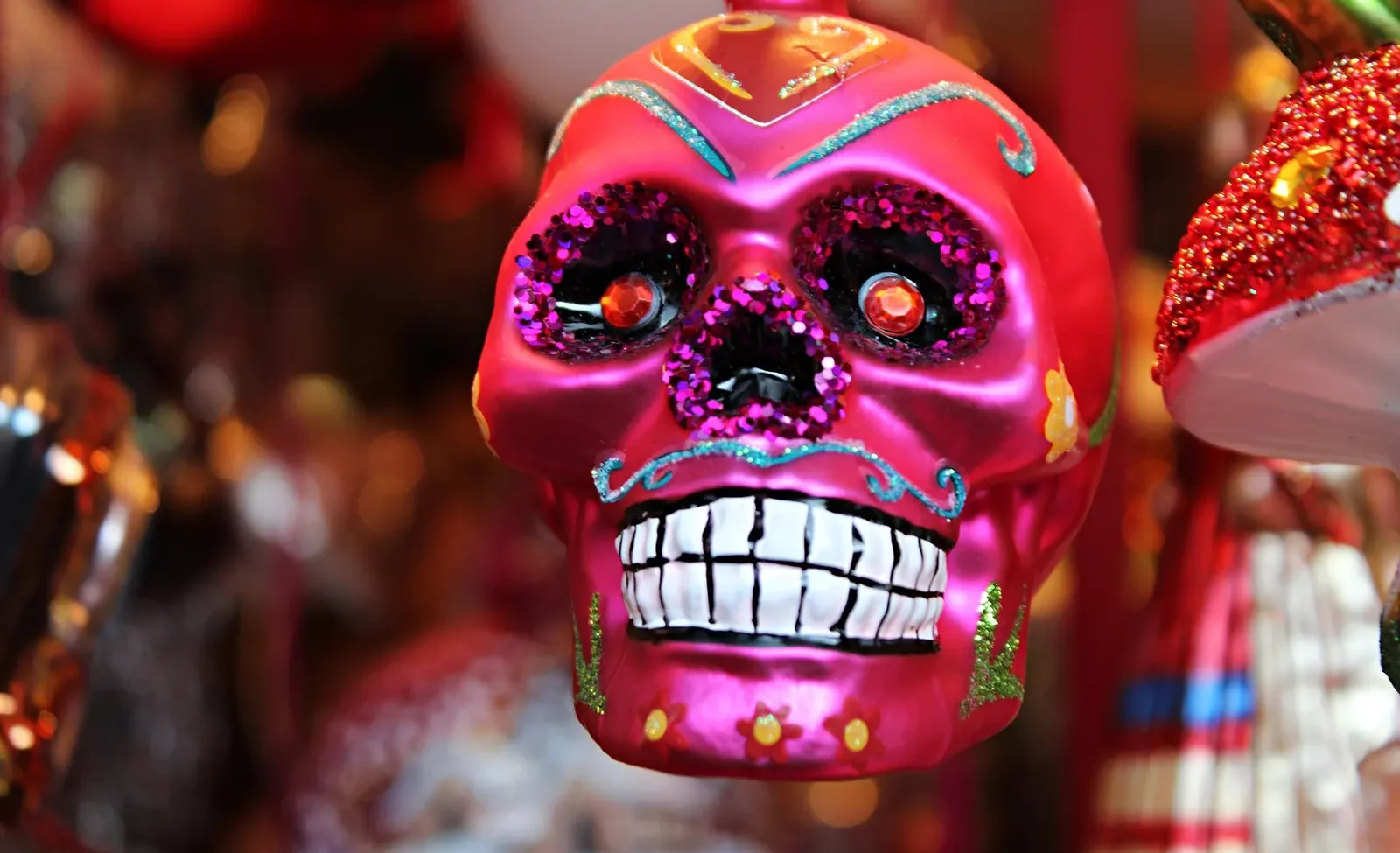
When the Halloween decorations are taken down and October is replaced by November, a different kind of celebration starts in Mexican and Latino communities all over Indiana and throughout the world. Día de Muertos—Day of the Dead—is frequently confused with Halloween and is often thought of as something scary or even regarded as demonic. However, people who know its origins understand the real truth: it is one of the most life-affirming and family-oriented traditions there is.
What Día de Muertos Actually Is
Día de Muertos is a festival about life and not about death; it gives people the chance to remember and honor the lives of their deceased relatives, with music, dancing, food and a sense of community (Smithsonian). The holiday began in ancient Mesoamerica, where indigenous peoples such as the Aztec, Maya and Toltec had set times when they would commemorate the people who had died (Smithsonian). In these pre-Hispanic cultures, death was seen as a natural aspect of life — a continuation rather than an end (National Geographic). The dead remained part of the community, living on in people’s memories and in spirit, and during Día de Muertos they temporarily came back to the Earth (National Geographic).
The festivities held today are a combination of pre-Hispanic religious ceremonies and Catholic holidays, occurring on November 1 and 2 — which correspond to All Saints’ Day and All Souls’ Day on the Catholic calendar (Library of Congress, National Geographic). On November 1 it is common practice to remember children who have died, and November 2 is devoted to celebrating adults (Smithsonian).
Origins: Far from Demonic
The holiday has its origins in the rituals of the Indigenous peoples of Mexico, who made skulls in remarkable ways as a means of paying respect to their deceased relatives (Library of Congress). Upon the arrival of the Spanish conquistadors in the 16th century, these traditions combined with Catholic observances and were thus adapted to coincide with All Saints’ Day and All Souls’ Day (Library of Congress). In 2008 UNESCO acknowledged the significance of Día de Muertos by including the holiday in its list of the Intangible Cultural Heritage of Humanity, noting that “the fusion of pre-Hispanic religious rites and Catholic feasts brings together two universes” (UNESCO).
The ofrenda, which is a temporary home altar, plays a central role in the celebration. It is not an altar for the purpose of worship but one that is intended to welcome the spirits back to the world of the living (National Geographic). Families put on the ofrenda photographs of the deceased, articles that belonged to them, and objects which act as reminders of the people’s lives (Smithsonian). The altar usually comprises the four elements: water (left in a pitcher so that the spirits may quench their thirst), wind (symbolized by papel picado, the traditional paper banners), earth (symbolized by food, particularly bread), and fire (candles) (Smithsonian).
Catholic Teaching: No Satanism Here
Catholic authorities have been clear with people who are concerned that Día de Muertos violates their Christian beliefs. Father Dominguez, quoted by the Catholic News Herald, says there is nothing sacrilegious or satanic about the festival or the altar dedicated to the dead, pointing out that the skulls commonly shown in Day of the Dead art are a means of recognizing our mortality and serving as a reminder to strive for eternal life with God in heaven (Catholic News Herald).
On the Day of the Dead, the family altars have Christ placed in a high position, then the images of the saints, and then the photographs of the deceased relatives for whom the families pray (Catholic News Herald). The different levels of the altar stand for the three states of the Church: the living, the dead in purgatory, and the communion of saints in heaven (Catholic News Herald).
It should be pointed out that Día de Muertos is frequently confused with Santa Muerte, a folk deity who personifies death and has connections with organized crime. Nevertheless, the Catholic Church has clearly denounced Santa Muerte and has made it clear that the two should not be mixed up with one another regarding the Catholic observance of the Day of the Dead (Catholic News Herald).
Key Symbols and Their Meanings
Marigold (Cempasúchil): The marigold is the flower associated with death; it is believed that its intense smell and bright color lead the souls who are wandering from the cemetery to their relatives’ homes (Smithsonian, Consulate General of Mexico in Dallas).
Sugar Skulls (Calaveritas): They are not somber symbols but rather playful reminders of the cyclic nature of life and are brightly decorated and left on altars for children who have died (Smithsonian).
La Catrina: The elegant skull figure, La Catrina, was created by the artist José Guadalupe Posada as a form of social commentary. The idea that “todos somos calaveras”—which means that we are all skeletons—suggests that beneath the human-made appearances that we adopt, all people are essentially the same (National Geographic).
Pan de Muerto: A soft and round sweet bread which contains anise and orange zest and is baked specially for the holiday (Library of Congress).
Papel Picado: Elaborate cut-paper banners which symbolize the wind and are used to decorate altars and the streets (Smithsonian, Consulate General of Mexico in Dallas).
How Día de Muertos Differs from Halloween
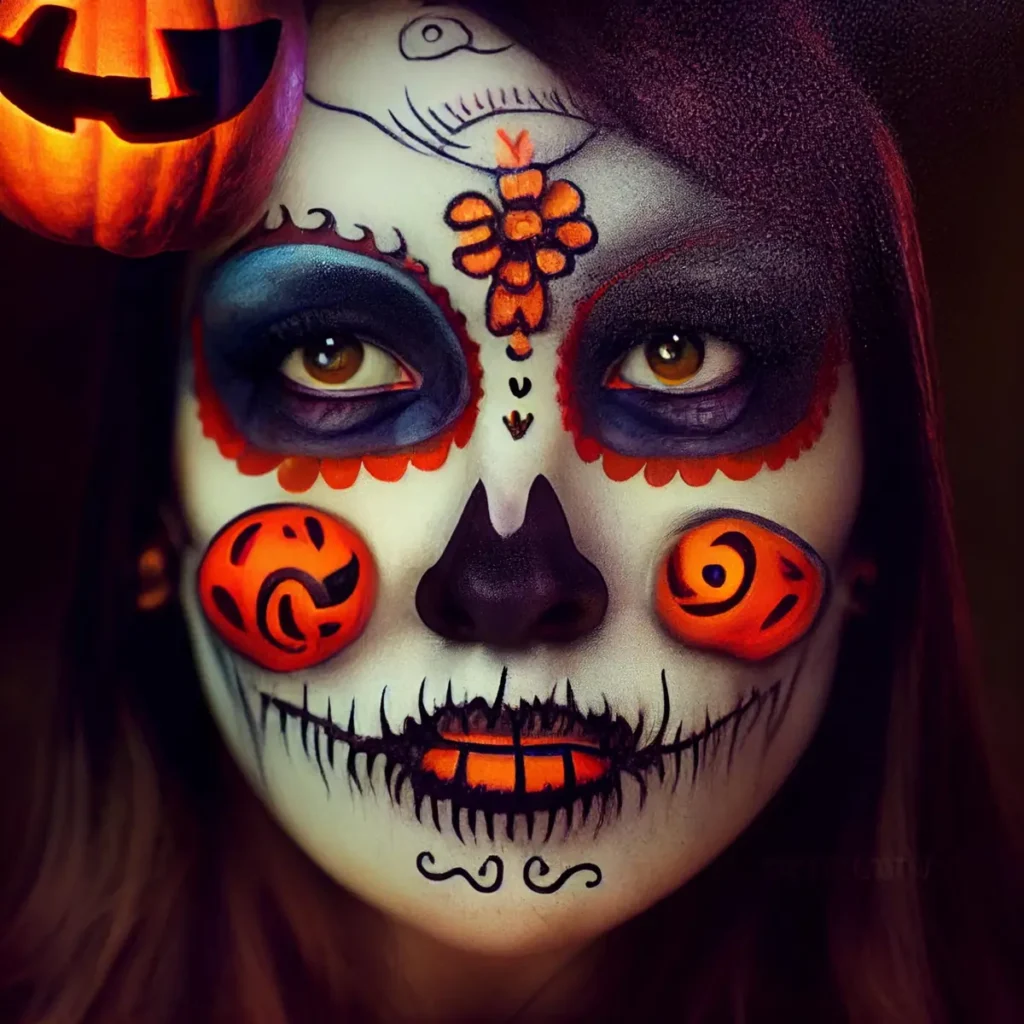
Although Halloween, which is celebrated on October 31, involves terror and mischievous behavior, Día de Muertos takes place on November 1 and 2 in “an explosion of color and life-affirming joy” (National Geographic); the Smithsonian points out that it is a chance to remember and honor the lives of deceased relatives, with music and dancing instead of fear (Smithsonian).
National Geographic states this directly: in stark contrast to Halloween, it is considered an insult to shriek or shrink from death during the Day of the Dead (National Geographic). The skeletons and skulls associated with Día de Muertos are shown as lively and fanciful creatures enjoying themselves—there is no fear or dread connected with them (National Geographic).
Celebrating in Indiana
Hoosiers have the chance to take part in genuine Día de Muertos traditions right in their own area. From October 10 through November 2, 2026, the Eiteljorg Museum in Indianapolis will have a community altar and an art exhibition, with the ofrendas being carefully put together by community groups and Arte Mexicano en Indiana (Eiteljorg Museum). The museum’s annual Día de Muertos Community Celebration on October 24 includes music, dance performances, cultural presentations, and the chance to make your own art (Eiteljorg Museum).
On October 24 in Indianapolis there will be a Día de Muertos Community Celebration featuring folklórico dance, mariachi music, and a procession of Catrinas, giving visitors an immersive insight into this traditional custom (Visit Indy).
A Celebration of Love That Endures
Essentially, Día de Muertos is concerned with love—specifically, the kind of love which outlasts death, the memories that keep our deceased family members alive in our spirit, and the ties that link generations together. It serves as a reminder that death is not something to be feared, but rather a natural aspect of the cycle of life.
A resolution introduced in the U.S. House of Representatives puts it well: Día de Muertos is an opportunity to reflect on the value of life and on the love which outlasts death, paying respect to those who came before us and to the memories that still guide our families and communities (H.Res. 838, 119th Congress).
Far from demonic, this holiday is a profound expression of human love, grief transformed into celebration, and the enduring connection between the living and those who have passed. It is a tradition worth understanding, respecting, and perhaps even experiencing for yourself.
Links & Resources
Día de Muertos – General Information & History
- History.com – Day of the Dead (Día de los Muertos)
- Smithsonian National Museum of American History – Day of the Dead at the Smithsonian: It’s Not Halloween
- National Geographic – Day of the Dead (Día de los Muertos)
- UNESCO – Intangible Cultural Heritage: Indigenous festivity dedicated to the dead
Catholic Teaching & Clarification on Santa Muerte
- Catholic News Agency – Día de los Muertos about more than the “bread of the dead,” bishop says
- Catholic News Agency – Have you heard of Saint Death? Don’t pray to her.
Symbols & Traditions
- History.com – Day of the Dead Symbols and Traditions
- National Geographic – Day of the Dead (Día de los Muertos)