The Indiana Persimmon: History, Harvest, and the “Fruit of the Gods”

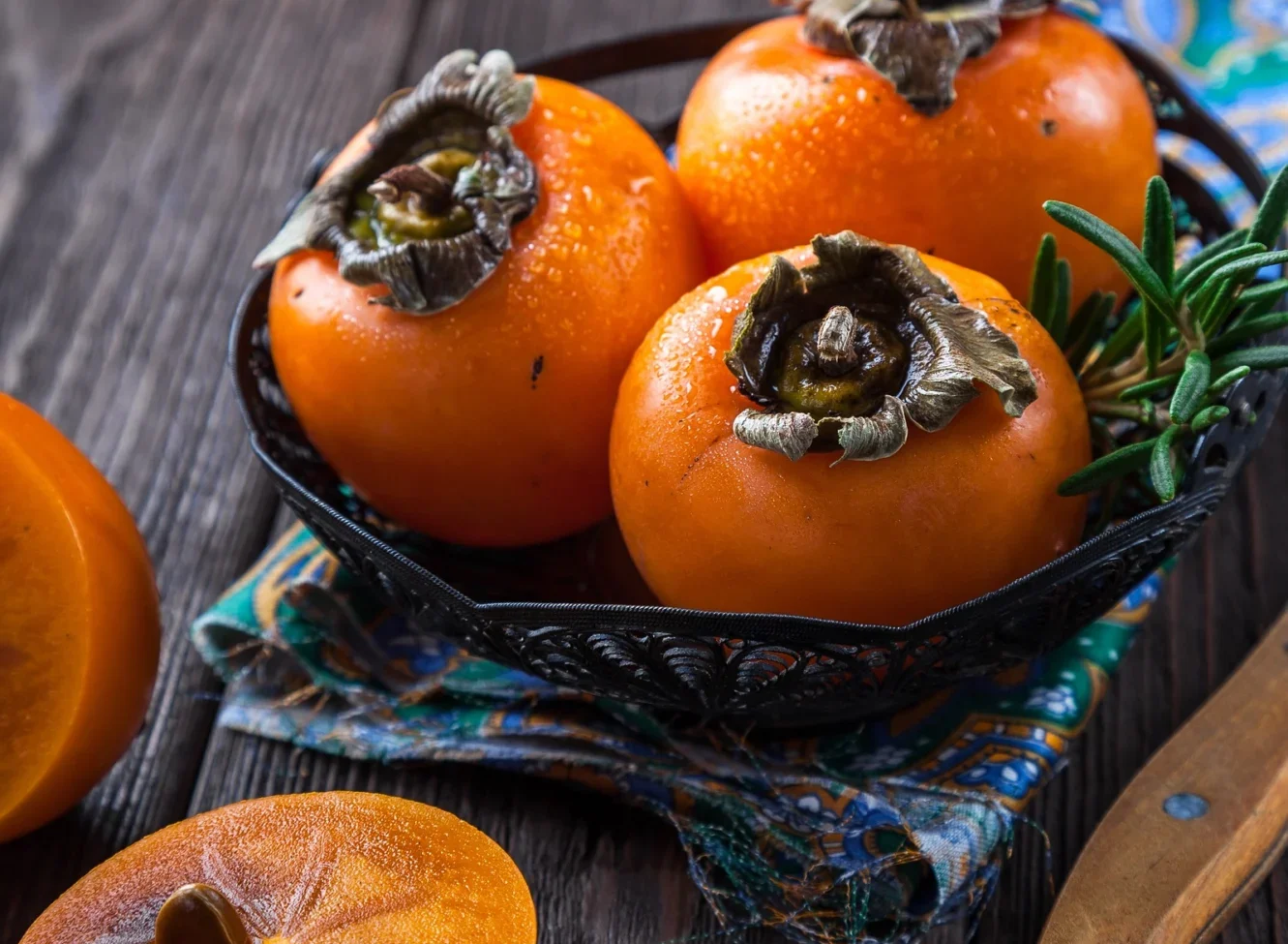
If you have ever had the misfortune of biting into an unripe persimmon, you know exactly what I am talking about: that pucker-up, clench-your-jaw sensation you regret right away. Give the same fruit time to turn soft as jam, though, and the taste changes to a sweet, honeyed, caramel-like flavor that has made this native Indiana fruit a favorite across the southern part of the state.
The American persimmon (Diospyros virginiana) grows wild in Indiana and is very often overlooked. The name is commonly translated as “divine fruit” or “fruit of the gods,” and that is exactly what you will find when you taste a perfectly ripe one. From the hills of Brown County to Mitchell, the “persimmon capital,” this small fruit has shaped Hoosier food customs and folklore for generations.
Origins and History: A Fruit Rooted in Indiana Soil
The American persimmon is a native fruit tree of the eastern United States. Its range runs from southern Connecticut and Long Island south to Florida, and west through central Pennsylvania, southern Ohio, southern Indiana, and central Illinois. In Indiana, persimmons are native to the southern two-thirds of the state, with isolated trees growing even farther north in places like West Lafayette.
The tree is a member of the ebony family (Ebenaceae). Persimmon wood is very hard, dense, and smooth, which is why it was historically used for golf club heads and for the shuttles in textile mills. In Indiana the tree usually reaches 35 to 60 feet. It prefers sun and moist, well-drained soil, but it also tolerates clay and dry ground.
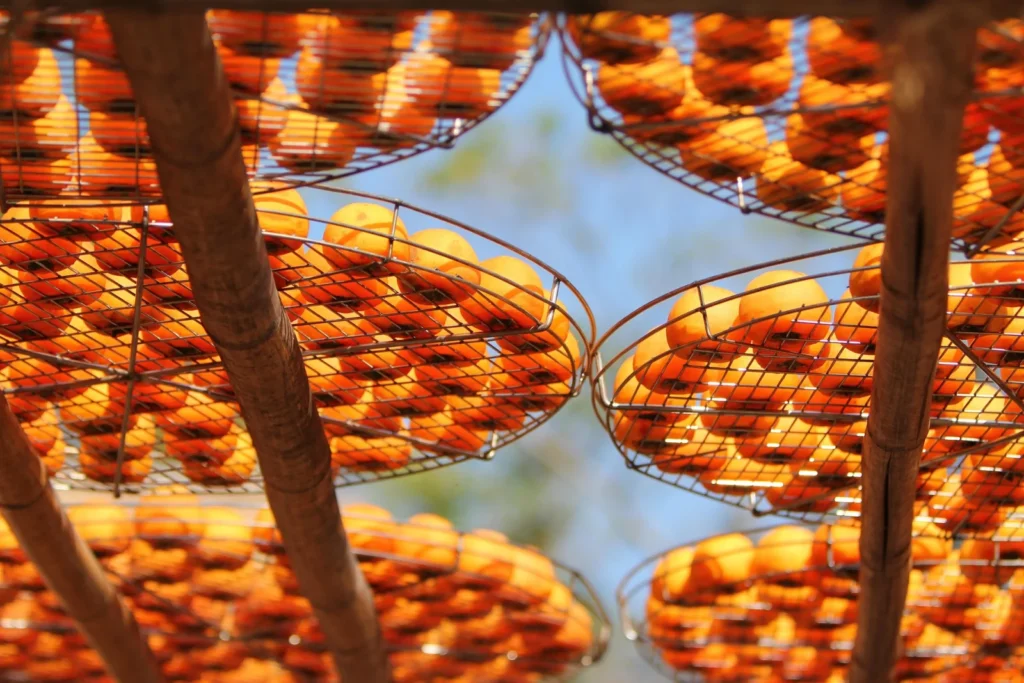
Native Americans valued the persimmon for centuries before Europeans arrived, eating it fresh or drying it much like prunes. Early settlers also worked persimmons into their diet and their medicine, brewing a tea to treat throat and stomach complaints. The Cherokee are said to have offered persimmon bread to early colonists, a tradition that echoes in today’s Hoosier persimmon pudding.
The Indiana Persimmon Belt: Where to Find Them
Persimmon country centers on Lawrence County, where the city of Mitchell claims special status as “the persimmon capital of the world.” Since 1947 the town has celebrated its persimmon legacy with the annual Persimmon Festival, complete with competitions, parades, craft fairs, and the famous persimmon pudding contest. The 79th festival ran September 19 through 26, 2026, and it returns every year in late September. For what is still ahead this season, see our guide to Indiana’s 2026 fall festivals.
You do not need to go to Mitchell to find persimmons. Wild trees grow all across southern Indiana. In neighboring Brown County, persimmon picking is a fall tradition, with families heading to the state parks and the countryside to gather ripe fruit from under roadside trees. If a tree stands on private land, ask before you pick.
The Astringency Problem: Why Timing Matters
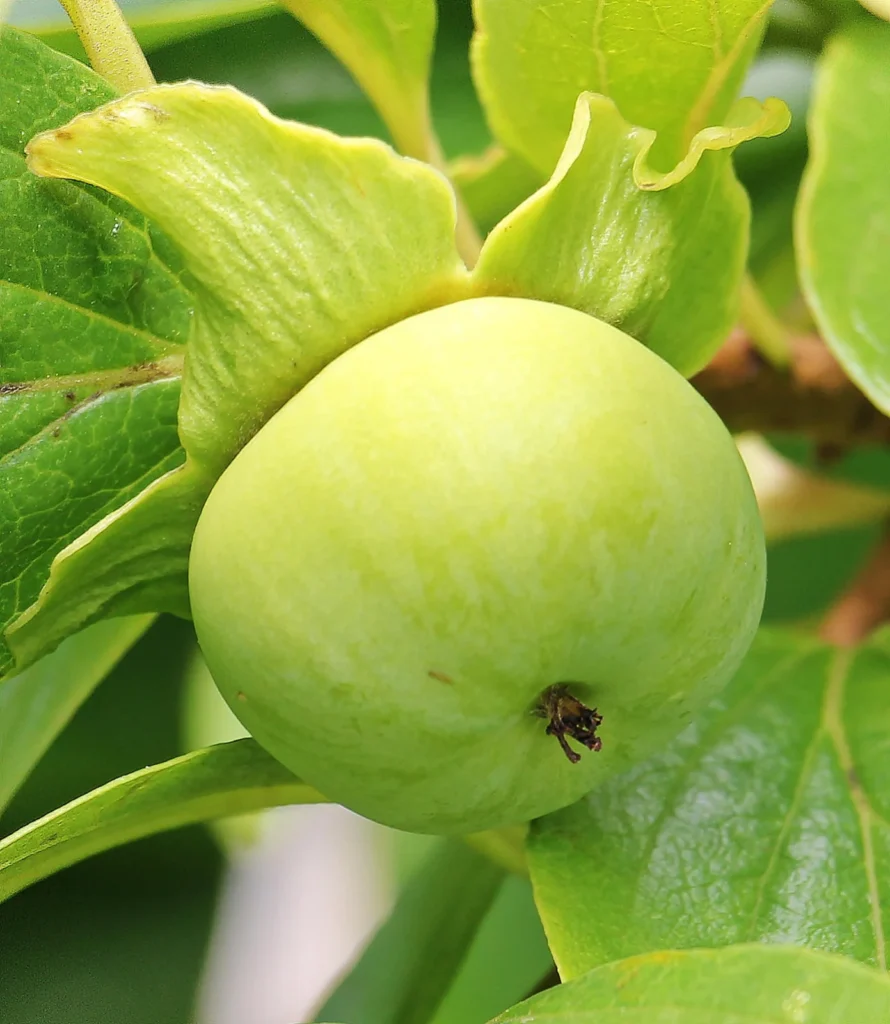
Persimmons are not ready to eat until they are perfectly ripe. Unripe fruit is high in tannins and tastes fiercely astringent, a feeling one writer described as your head shrinking while you try to get rid of a ball of glue stuck in your mouth.
Contrary to what many people believe, persimmons do not need a frost to become edible. Plenty of trees lose their astringency as the fruit ripens naturally, long before the first frost arrives. The trick is patience. The best persimmons are the ones that have already fallen from the tree: soft, almost translucent, with slightly wrinkled skin. That is when they have the sweet flavor you are after.
What Can You Do With Persimmons? Uses and Recipes
Ripe persimmon pulp is extremely versatile in the kitchen. You can eat the fruit fresh, but its most beloved uses are in baked goods and preserves. The pulp works well in puddings, pies, breads, cookies, cakes, custards, and jam, as well as ice cream and sherbet.
Some early settlers went as far as making persimmon vinegar, molasses, beer, and brandy. Roasted, ground persimmon seeds were even used as a coffee substitute. In southern Indiana, persimmon pudding is still one of the most famous dishes on the table every Thanksgiving and Christmas.
Indiana Persimmon Pudding
This recipe follows the classic Hoosier method. It is based on a recipe credited to Alverta S. Hart of Mitchell, Indiana, who was part of the Mitchell Persimmon Festival pudding competition for nearly 40 years.
Ingredients
- 1 cup seedless raisins
- ½ cup brandy
- ½ cup sugar
- 2 cups brown sugar, firmly packed
- 2 cups persimmon pulp
- 1 cup vegetable oil
- 4 eggs
- 4 cups all-purpose flour
- 2 teaspoons baking soda
- ½ teaspoon salt
- 1 cup chopped walnuts or pecans
Instructions
- Preheat the oven to 350°F. Grease and flour two 9×5-inch loaf pans.
- Soak the raisins in the brandy and set aside.
- Combine the sugars, persimmon pulp, and oil in a large bowl. Add the eggs one at a time, beating well after each addition.
- Sift together the flour, baking soda, and salt. Add to the wet ingredients and mix until just combined.
- Fold in the brandied raisins and the nuts.
- Pour the batter into the prepared pans and bake for about 1 hour, or until a toothpick inserted in the center comes out clean.
Persimmon Cookies
For a quicker persimmon treat, these soft, spiced cookies come together in about 30 minutes and freeze beautifully.
Ingredients
- ½ cup butter, softened
- 1 cup sugar
- 1 egg
- 1 cup persimmon pulp
- 1 teaspoon baking soda
- 2 cups all-purpose flour
- ½ teaspoon salt
- 1 teaspoon ground cinnamon
- ½ teaspoon ground nutmeg
- ¼ teaspoon ground cloves
- 1 cup chopped walnuts or pecans
- ½ cup raisins (optional)
Instructions
- Preheat the oven to 350°F.
- Stir the baking soda into the persimmon pulp and set aside.
- Cream the butter and sugar together until light and fluffy. Beat in the egg.
- Add the persimmon mixture and mix well.
- Sift together the flour, salt, and spices. Gradually add to the wet ingredients.
- Fold in the nuts and raisins.
- Drop by spoonfuls onto greased cookie sheets and bake for 15 to 20 minutes.
Preserving the Harvest: Freezing Persimmon Pulp
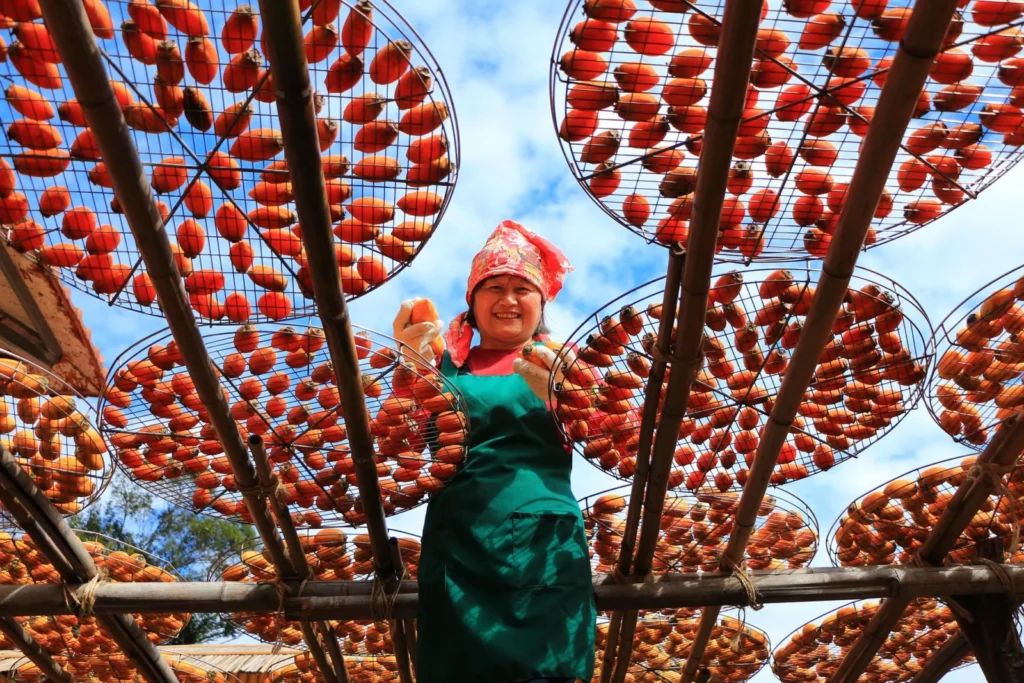
Freezing persimmon pulp lets you enjoy persimmons all year long. Scoop the pulp out of ripe persimmons and pack it into ice cube trays or airtight, freezer-safe containers. Adding ⅛ teaspoon of ascorbic acid per quart of pulp helps it keep its orange color. Frozen pulp keeps for 10 to 12 months, which means persimmon bread in February and persimmon pudding in July.
The Persimmon Seed Weather Folklore
No look at Indiana persimmons would be complete without the old custom of reading persimmon seeds to predict the winter. As the legend goes, if you split a seed in half, the pale shape inside tells the story. A spoon means plenty of snow to shovel. A knife means a cold winter with sharp, cutting winds. A fork means a mild winter with food enough to last until spring.
This piece of Hoosier folklore has survived for generations and is still popular across Indiana. Even if you do not believe the prophecy, it is a fine way to enjoy the autumn and get acquainted with the persimmon trees that have grown here for hundreds of years.
Growing Persimmons in Indiana
If you are ready to plant persimmons on your own property, there are a few things to know. The trees are dioecious, meaning each tree bears either male or female blossoms, and both need to be nearby for fruit to set. Only female trees bear fruit, and if you plant seedlings it will take several years to learn whether you have a female.
For that reason, buy grafted or budded trees from a nursery. Persimmons need full sun and well-drained soil, and they can survive temperatures of 20 to 25 degrees below zero, so they are hardy enough for Indiana. The deep taproot makes a persimmon hard to transplant, so choose its permanent spot carefully and plant young trees in early spring.
A Fruit Worth the Wait
The Indiana persimmon rewards patience. It has to be gathered at the right time, when it falls from the tree on its own, then handled with care and used wisely. In exchange, it gives you a taste found nowhere else: a sweet, complex flavor that belongs to this part of the country.
Whether you gather persimmons along the roadsides of Brown County, bake a persimmon pudding for Thanksgiving, or split a seed open to see what winter holds, the persimmon connects you to the Hoosier tradition of enjoying “the fruit of the gods.”

2 thoughts on “The Indiana Persimmon: History, Harvest, and the “Fruit of the Gods””